National Wellness Month: Looking Beyond the Scale with GLP-1 Weight Loss and Hormone Health
Every August, National Wellness Month encourages people to look beyond the scale and think about what it truly means to be healthy. For many, that journey begins with weight loss. In recent years, medically supervised GLP-1 weight loss programs have transformed the treatment of obesity and metabolic disease, helping many people achieve sustainable results where diet and exercise alone have not been enough.
But wellness is about much more than reaching a target weight.
Even after successful weight loss, some people continue to experience low energy, poor sleep, reduced muscle strength, slower recovery after exercise, or changes in their skin and body composition. These experiences highlight an important reality: the number on the scale is only one measure of health.
True wellness is shaped by many interconnected factors, including metabolism, hormone health, nutrition, muscle mass, sleep, stress, and physical activity. At One Point Six Aesthetics in Santa Cruz, we often see patients who begin their journey focused on weight loss, only to discover that taking a more comprehensive approach to their health helps them feel stronger, healthier, and more confident long after the weight has come off.
Is Weight Loss the Same as Wellness?
Weight loss is often seen as the ultimate measure of success, but reaching a healthier weight does not automatically mean every aspect of your health has improved. That's because body weight tells only part of the story.
True wellness is about improving overall metabolic health, not simply reducing body weight. It involves supporting healthy blood sugar regulation, preserving lean muscle and bone health, reducing inflammation, improving cardiovascular health, and building sustainable habits that support long-term wellbeing.
Rather than focusing solely on how much weight has been lost, physician-led wellness looks at how your overall health is improving. That broader perspective helps create healthier, more sustainable outcomes that extend far beyond the number on the scale.
How Does Medically Supervised GLP-1 Weight Loss Support Long-Term Health?
GLP-1 medications have transformed the treatment of obesity and metabolic disease by helping regulate appetite, improve blood sugar control, and reduce food cravings. For many people, they make sustainable weight loss more achievable.
However, medication alone is only part of the process. The best results come from a physician-led program that supports overall health throughout the weight loss journey.
This typically includes:
Comprehensive medical assessment
Ongoing monitoring and treatment adjustments
Nutrition and protein guidance
Strategies to preserve lean muscle mass
Regular follow-up appointments
Maintaining muscle is just as important as losing body fat, as it supports metabolism, strength, mobility, and healthy aging.
At One Point Six Aesthetics, our medically supervised GLP-1 programs are tailored to each individual's health, lifestyle, and long-term wellness goals, helping patients achieve healthy, sustainable results rather than simply focusing on the number on the scale.
Why Do Some People Still Feel Tired After Losing Weight?
While many people experience significant improvements in their health following weight loss, persistent fatigue or reduced physical performance should never simply be dismissed as part of the process.
Several factors may contribute, including inadequate protein intake, loss of lean muscle, poor sleep quality, nutritional deficiencies, increased stress, or underlying medical conditions. In some men, symptoms may also be related to declining testosterone levels, particularly when fatigue is accompanied by reduced strength, lower libido, slower recovery from exercise, or difficulty maintaining muscle despite regular activity. Understanding these potential causes is an important part of comprehensive wellness.
Could Low Testosterone Be Affecting Your Wellness?
Testosterone is often associated with muscle growth or sexual health, but its role in the body is far broader than many people realize. It influences energy production, metabolism, muscle maintenance, bone health, mood, cognitive function, and overall wellbeing throughout adult life.
Although testosterone levels naturally decline with age, not every man experiences symptoms, and not everyone with symptoms has low testosterone. This is why it is important to avoid self-diagnosing based on information found online or social media.
At One Point Six Aesthetics, we often see men who assume that persistent tiredness, reduced motivation, or difficulty maintaining muscle are simply part of getting older. In reality, these symptoms may have many different causes, ranging from poor sleep and chronic stress to nutritional deficiencies, certain medical conditions, or hormone imbalances. A thorough medical evaluation is essential before any treatment is considered.
What Are the Symptoms of Low Testosterone and How Is It Diagnosed?
Low testosterone can develop gradually, making symptoms easy to mistake for the effects of aging, stress, or a busy lifestyle.
Common symptoms include:
Persistent fatigue
Reduced muscle mass or strength
Increased body fat
Lower libido
Poor exercise performance or slower recovery
Difficulty concentrating or "brain fog"
Low motivation or mood changes
These symptoms are not specific to low testosterone and can also be caused by conditions such as thyroid disorders, sleep apnea, chronic stress, depression, or nutritional deficiencies.
Because of this, diagnosis should never be based on symptoms alone. A comprehensive medical assessment, including a review of your medical history, lifestyle, and blood tests, is needed to determine whether testosterone deficiency is present and whether treatment is appropriate. Hormone levels can fluctuate naturally, so looking at the complete clinical picture helps ensure an accurate diagnosis and personalized treatment plan.
When Is Hormone Optimization Appropriate?
When testing confirms a hormone deficiency and treatment is clinically appropriate, hormone optimization may help restore testosterone to a healthy physiological range.
The goal is not to create unnaturally high hormone levels or enhance athletic performance. Instead, hormone replacement therapy aims to address a medically diagnosed deficiency while supporting overall health and quality of life.
One Point Six Aesthetics offers bioidentical hormone replacement therapy (BHRT) using hormone pellets, providing a steady release of hormones over several months. Unlike treatments that require daily tablets or frequent injections, hormone pellets are inserted beneath the skin during a simple in-office procedure and gradually release a consistent dose over time.
Many patients appreciate this approach because it helps maintain more stable hormone levels while reducing the need for frequent treatment. Regular follow-up appointments and laboratory testing remain an essential part of care, allowing physicians to monitor progress and adjust treatment when necessary.
As with any medical therapy, hormone optimization is not appropriate for everyone. Careful patient selection, ongoing monitoring, and individualized treatment planning are fundamental to achieving safe and effective outcomes.
Can GLP-1 Weight Loss and Hormone Health Be Connected?
Although GLP-1 therapy and testosterone replacement address different medical concerns, both play an important role in overall health and body composition.
Weight loss can improve metabolic health, while healthy testosterone levels help support muscle mass, energy, physical performance, and recovery. For some men, losing weight may naturally improve testosterone levels. Others may continue to experience symptoms because an underlying hormone deficiency remains.
This is why physician-led wellness programs take a comprehensive approach, considering how weight, metabolism, hormones, nutrition, sleep, and lifestyle work together. Rather than relying on a one-size-fits-all solution, treatment recommendations are tailored to each individual's health, symptoms, and long-term wellness goals.
Can Weight Loss Change Your Skin?
One topic that has received growing attention alongside the popularity of GLP-1 medications is how significant weight loss can affect the skin.
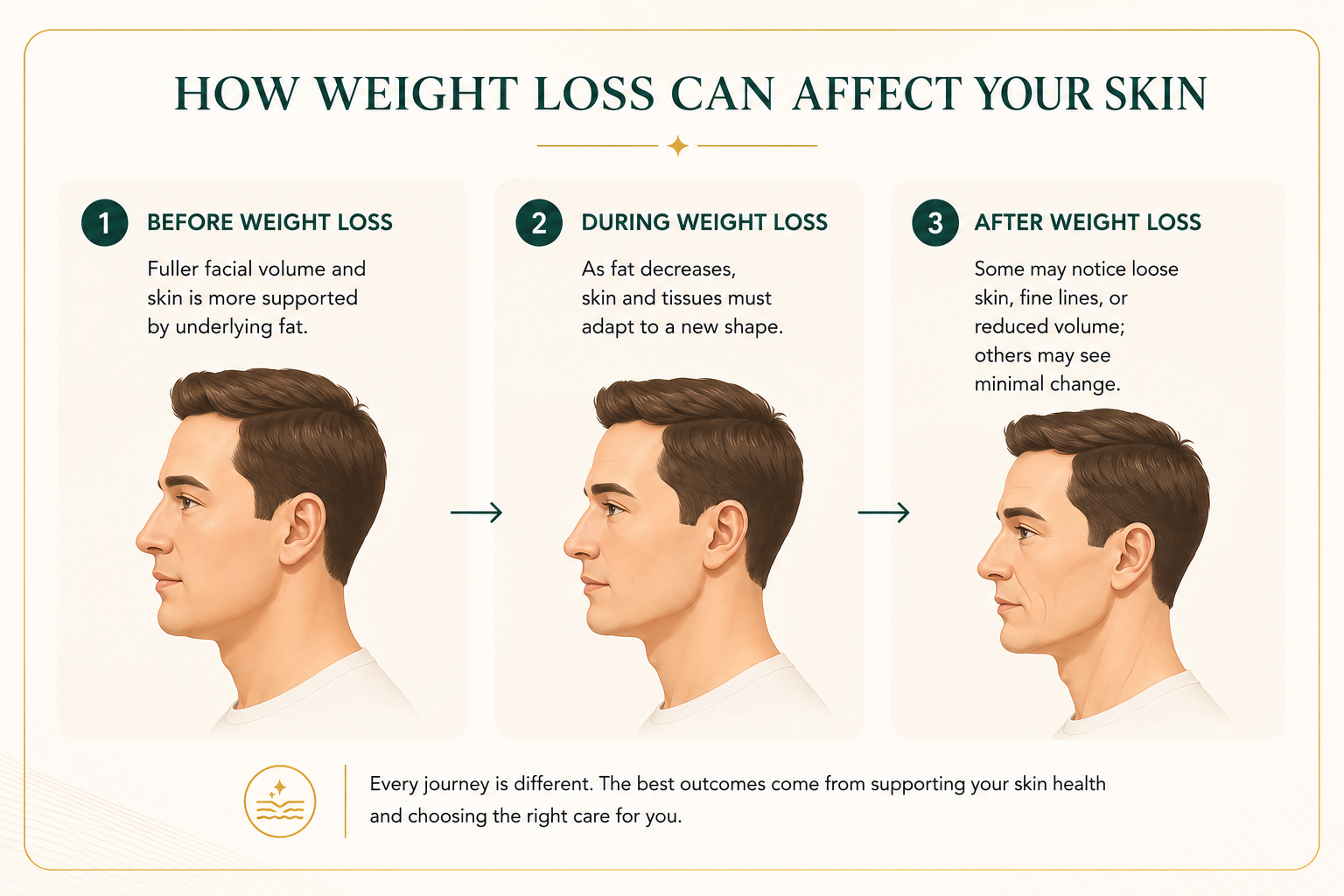
Age, genetics, sun exposure, collagen production, smoking history, and the amount of weight lost all influence how the skin responds. This is why two people following similar weight loss journeys may have very different experiences.
It's also important to remember that these changes are not caused by the GLP-1 medication itself. Rather, they are a natural consequence of significant fat loss and the skin adapting to a changing body.
For many people, the skin gradually adjusts as weight stabilizes. Supporting skin health throughout your weight loss journey may also help maintain skin quality. This includes:
Good nutrition, including adequate protein intake
Staying well hydrated
Daily sun protection
A consistent medical-grade skincare routine
If skin changes become more noticeable, treatment recommendations are always tailored to the individual and the severity of the concern.
For milder skin changes, treatment may include:
Medical-grade skincare
Microneedling
Platelet-Rich Fibrin (PRF)
These treatments focus on improving skin quality and supporting the body's natural collagen production.
When collagen loss or facial volume changes are more significant, treatment may include:
Sculptra®
Hyperdilute Radiesse®
Rather than simply replacing lost volume, these collagen-stimulating treatments encourage the body to gradually produce new collagen, helping improve skin quality, firmness, and structural support over time.
Not everyone needs aesthetic treatment after losing weight, and for many patients, no intervention is necessary. The most appropriate approach always depends on individual anatomy, skin quality, and personal goals.
Wellness Is About Building Long-Term Health
National Wellness Month is a reminder that health is about more than a number on the scale. While medically supervised GLP-1 weight loss can be an important part of the journey, lasting wellness is built through healthy lifestyle habits, good nutrition, regular physical activity, quality sleep, balanced hormone health, and appropriate medical care.
Looking beyond the scale also means recognizing that every wellness journey is different. Whether the goal is improving metabolic health, addressing a hormone imbalance, or simply having more energy for everyday life, the most effective wellness plans are personalized, evidence-based, and focused on long-term health rather than short-term results.
Frequently Asked Questions
Can GLP-1 medications affect testosterone levels?
GLP-1 medications are not designed to increase or decrease testosterone directly. However, weight loss may improve hormone balance in some men living with obesity. If symptoms of low testosterone persist, medical assessment and blood testing are recommended.
Does low testosterone make it harder to lose weight?
It can contribute to changes in body composition, including reduced muscle mass and increased body fat. However, many factors influence weight management, including nutrition, physical activity, sleep, stress, medications, and underlying medical conditions.
Should hormone levels be checked before starting a GLP-1 weight loss program?
Not everyone requires hormone testing before beginning treatment. However, if symptoms such as persistent fatigue, low libido, reduced strength, or difficulty maintaining muscle are present, your physician may recommend further investigation as part of a comprehensive assessment.
Is rapid weight loss always bad for your skin?
Not necessarily. Many people notice very little change, while others develop looser skin or reduced facial volume depending on their age, genetics, and the amount of weight they lose. Supporting skin health throughout the weight loss process may help maintain skin quality.
Looking Beyond the Scale Starts With Understanding Your Health
If you're considering medically supervised GLP-1 weight loss, wondering whether low testosterone could be affecting your wellbeing, or simply looking for a more comprehensive approach to long-term wellness, the first step is understanding your individual health.
At One Point Six Aesthetics in Santa Cruz, our physician-led wellness services are designed to look beyond weight alone, helping patients better understand the factors influencing their health, metabolism, and overall wellbeing. Every recommendation begins with a comprehensive consultation and is tailored to your unique goals, medical history, and lifestyle.
Book a consultation to learn more about our personalized approach to medical weight loss, hormone optimization, and long-term wellness.